The Creed Made Flesh
_A watchRasta field report_
Self-care is not a luxury. In livityLivityThe righteous Rastafari concept of living in harmony with all creation, emphasizing naturalness, Jah, and Ital eating. it is a returning — to the crown, to the foot, to the pot, to the child in the yard — and to the prayer that still names the work:
_That the hungry be fed, the naked clothed, the sick nourished, the aged protected, and the infant cared for._
On August 30, under white tents and a painted Rasta tree, the Yashimabet Holistic Care Foundation made that sentence visible: buckets and towels, gloved hands on an elder’s foot, plantain on the fire, a baby reaching, a microphone passed to grey beard.
Named for Woizero Yeshimebet Ali — mother of His Imperial Majesty Haile SelassieSelassieHis Imperial Majesty Emperor Haile Selassie I of Ethiopia, revered by Rastafari as the representation of Jah on Earth. I — the Foundation treats healing as lineage, not lifestyle. watchRasta was in the yard. This is what the day looked like.
### Why a yard day still matters in 2026
The global wellness economy is about **$6.8 trillion**. Rest is a market. So is the gap that market leaves.
In 2025, **645 million people** still faced hunger. About **2.7 billion** could not afford a healthy diet. Roughly **one in four** people still hit financial hardship from medical bills. Adults 60 and over already command about **$19 trillion** in spending, while long-term care in the Global South has not kept pace.
Jamaica sits inside those numbers. Five months after Hurricane Melissa, **moderate or severe food insecurity** still sat near **42 percent**. Households with elders, infants, and people living with disability carried the heaviest load.
Yashimabet did not answer with a brochure. They answered with water on locks, oil on a back, a plate toward the fence, and a form filled in so nobody’s foot went unseen.
### The crown — the naked clothed
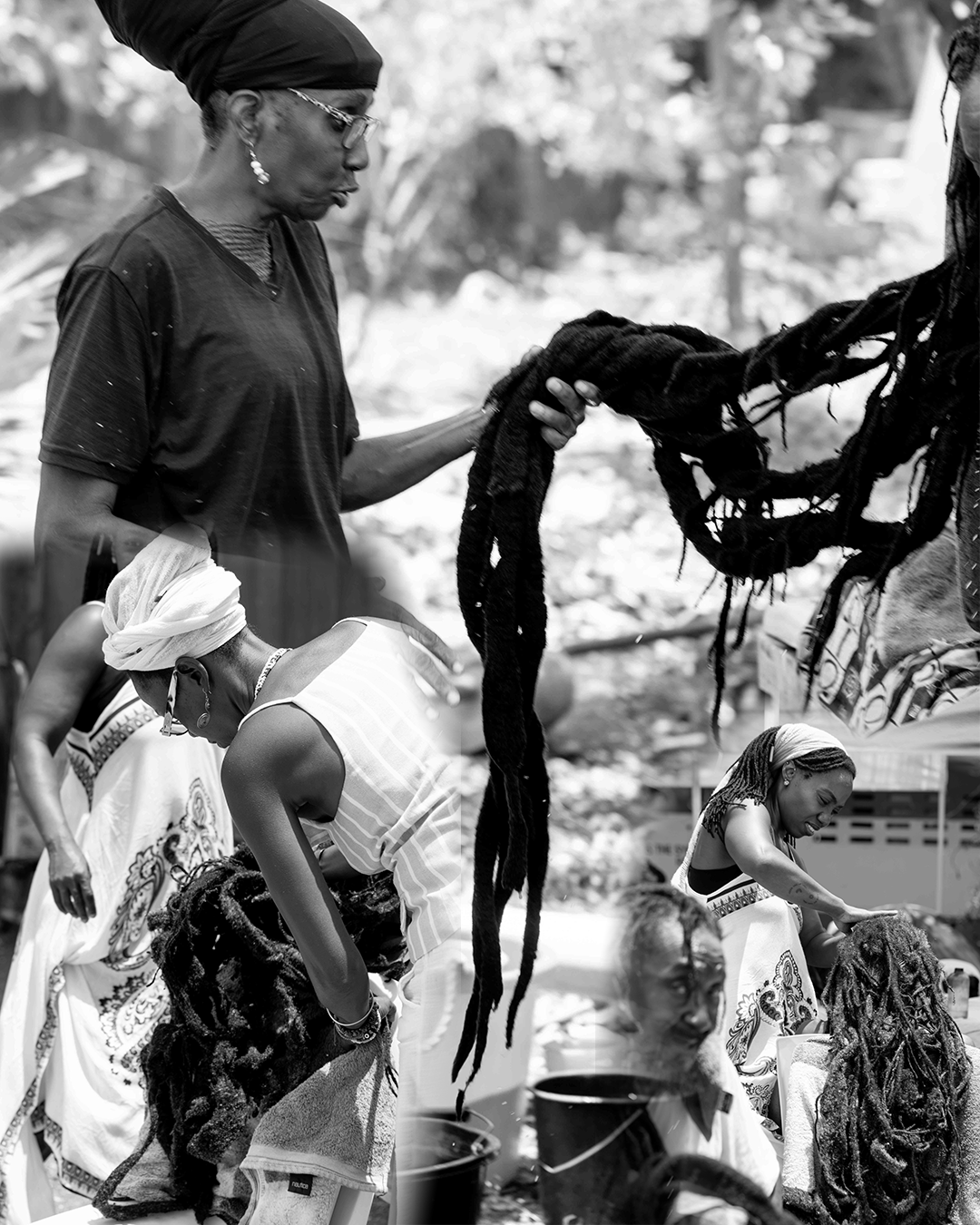
The first work was hair.
Sistren in wraps and dashiki bent over buckets. Long locs were lifted, rinsed, wrung, laid across towels. An elder sat while two sets of hands worked his crown. A woman in glasses held a full fall of wet dreadlocks the way you hold something sacred and heavy — because it is.
In Rastafari the locks are covenant. To wash them in public, with patience, is to clothe a person again after the week has stripped them. No salon glass. Plastic chairs, chain-link, a white tent. The luxury was time.
### The body — the sick nourished, the aged protected
Under the tent, a brethren in white smiled while two women dressed his locs. Below that joy: an elder on his back on yellow-and-black cloth, bare feet to the sun, receiving bodywork. Watermelon at the edge of the table.
Across the yard, a sistren in a white wrap filled a **Holistic Care** form. Over that page: blue gloves, an electric file, the thickened nail of an elder’s foot. Podiatry is how you keep a man walking. For older Jamaicans — the island’s fastest-growing age group — a neglected foot is a fall, a wound, a bed.
White robes, gold chain, dark glasses, handmade Rasta-colour moccasins: an elder sat like a court in the yard. Beside him two brethren moved — one in a yellow Ethiopia shirt laughing with fist to chest, one grey-bearded and leaning into the rhythm. Protection of the aged is a culture that will not rush the elder out of the dance.
### The pot — the hungry fed
Plantain blistered black and gold. Pumpkin stewed down to amber. A brethren in a green tam cut scallion. A coconut bowl came forward: ItalItalDerived from 'vital', a plant-based, organic diet free from salt, preservatives or chemicals, promoting spiritual purity. stew over grain. A yellow plate followed.
A man in a red tam raised a joined hand over the food. Someone passed a plate toward an elder on the concrete ledge by the fence. The fence did not stop the sharing.
In a year when too many storm-hit households still reported a week with no fruit, this table was policy.
### The child — the infant cared for
A baby in a purple onesie reached from a mother’s lap. Two women leaned in, laughing. The infant was not a prop. If the child is held, the house is still alive.
Holistic here did not mean expensive. It meant the infant, the elder on the cloth, and the brethren in the wash chair shared the same yard.
### The reasoningReasoningA highly spiritual communal gathering for dialogue, meditation, and chanting to elevate collective consciousness. — integration
An elder in a knitted tam took the microphone. Two women locked arms. Three generations sat on the same low wall: yellow Ethiopia shirt, zebra-print tunic and beret, black tee. The painted tree ran red, gold, and green down the trunk.
A sign closed the day:
**Thank You Call Again.**
Yashimabet gives thanks to every soul who attended, trusted the space, and chose their well-being without apology.
### Carry the day. Fund the next wash.
A Care Day ends when the buckets are emptied. The creed does not.
**Do this now at [watchrasta.tv](https://www.watchrasta.tv/):**
1. **Shop the watchRasta drop.** Wear SIX. Wear the colours the tree is painted in. 2. **Stream and share the Care Day films.** Testimony is the microphone, the laugh, the plate toward the fence. 3. **Support the next Holistic Care Day.** Restock the plantain. Keep the gloves and the file in the kit. Pay the hands that wash the locks.
The hungry were fed from a yellow plate.
The naked were clothed when the locks were washed.
The sick were nourished on the cloth.
The aged were protected in white, in the dance, and at the fence.
The infant was cared for in a mother’s arms.
Return to yourself. Then return to them.
**→ [watchrasta.tv](https://www.watchrasta.tv/) — complete the action today.**
_watchRasta — culture forward._
**Thank You. Call Again.**